
UV-Cured CIPP Lining
Ultraviolet light cures a glass-fiber liner quickly and consistently, with tight control over the process and strong, thin-walled results.
The details, in plain English.
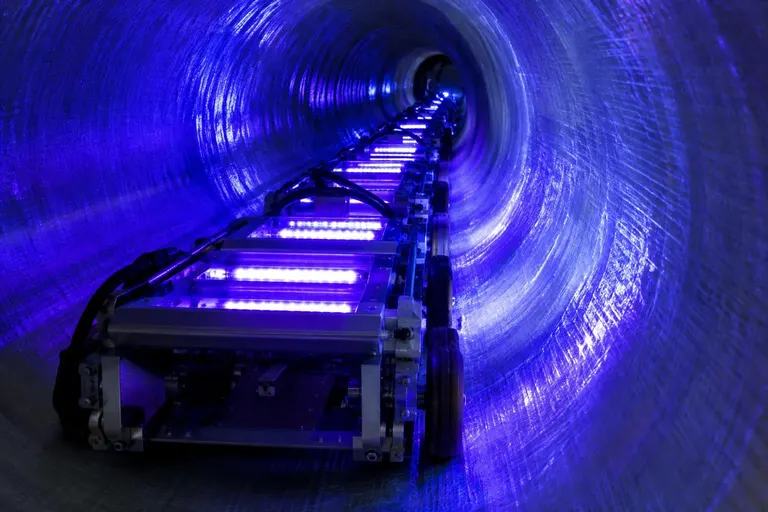
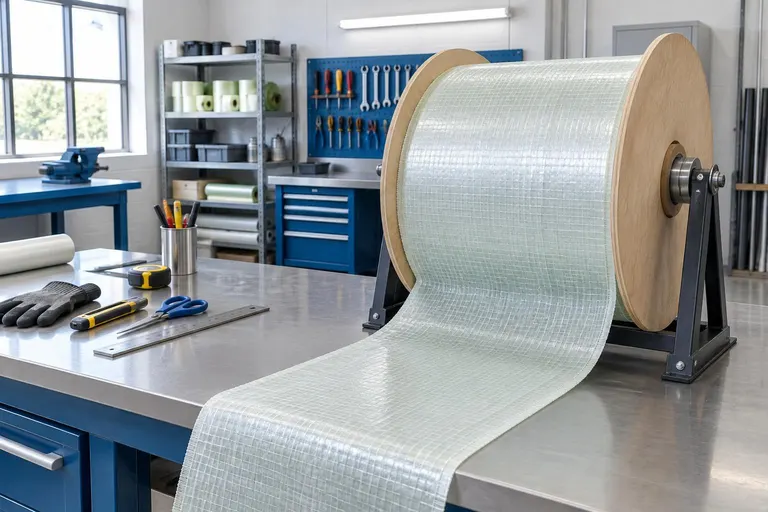
In UV-cured CIPP, a glass-fiber liner saturated with a light-sensitive resin is pulled into the pipe and inflated with air. A train of ultraviolet lights then travels through the liner, curing the resin as it passes. The process is quick and carefully monitored.
UV curing is well suited to many sewer and storm lines because the cure is fast and repeatable, the liner is strong for its thickness and there is no hot water or steam to manage. The method is chosen after inspection, and some conditions favor other cure methods.
Best for
- Mainlines and larger laterals
- Storm and sewer lines
- Projects that need fast cure
- Thin-wall, high-strength liners
What you get with this service.
Fast cure
Light moves through and cures as it goes.
Monitored
Temperature and speed are logged during the cure.
High strength
Glass fiber gives strength in thin walls.
No hot water or steam
Simpler site logistics.
From first look to finished pipe.
- 1
Prepare the line
Camera and clean.
- 2
Pull in the liner
Position the glass-fiber liner.
- 3
Inflate and cure
Run the UV train through.
- 4
Inspect
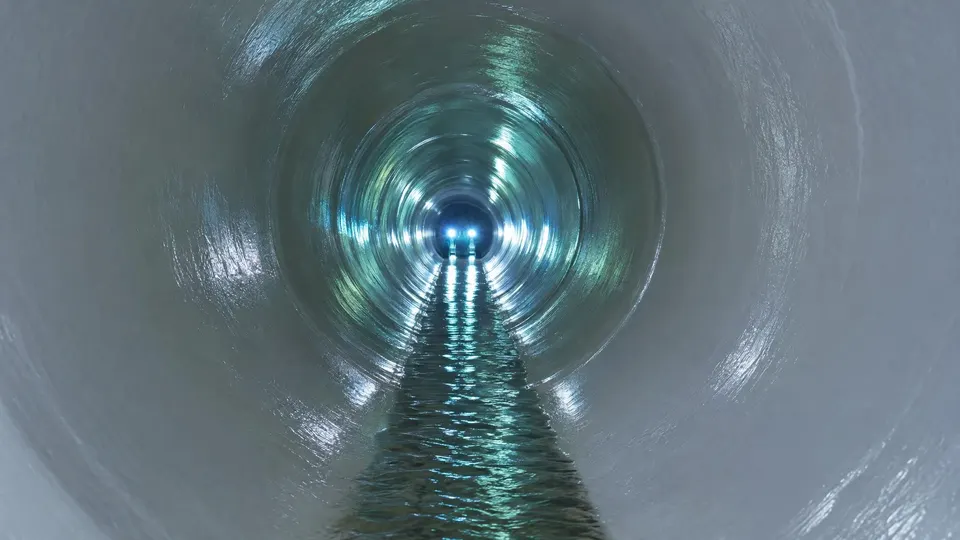
Camera the finished pipe.
Questions, answered
Is UV better than steam or hot water?
It is a different tool. UV excels for many lines, while hot water or steam suits others. We choose based on the pipe, length and conditions.
Can UV cure in wet pipes?
Flow must be controlled and the pipe prepared. We plan bypass and drying as part of the job.
How do I get a price?
Fill in the form or call 800-224-9245. We schedule a free camera inspection, show you the footage and send a written estimate.
How long does it take?
Most home repairs are finished in about a day. Longer runs, commercial lines and complex sites take longer, and we give you the schedule before we start.
Related services
Ready to see what is inside your pipe?
Send the form for a free camera inspection and a written estimate, or try the Pipe Problem Finder first.